
SMART CERTIFIED BIOLOGICAL DENTISTRY
Safe Mercury & Metal Removal in Ohio
A careful, protocol-driven approach designed to reduce unnecessary exposure during mercury amalgam and dental metal removal.
Dr. Johnson has completed IAOMT requirements for SMART certification and incorporates the protocol when removing mercury amalgam restorations.
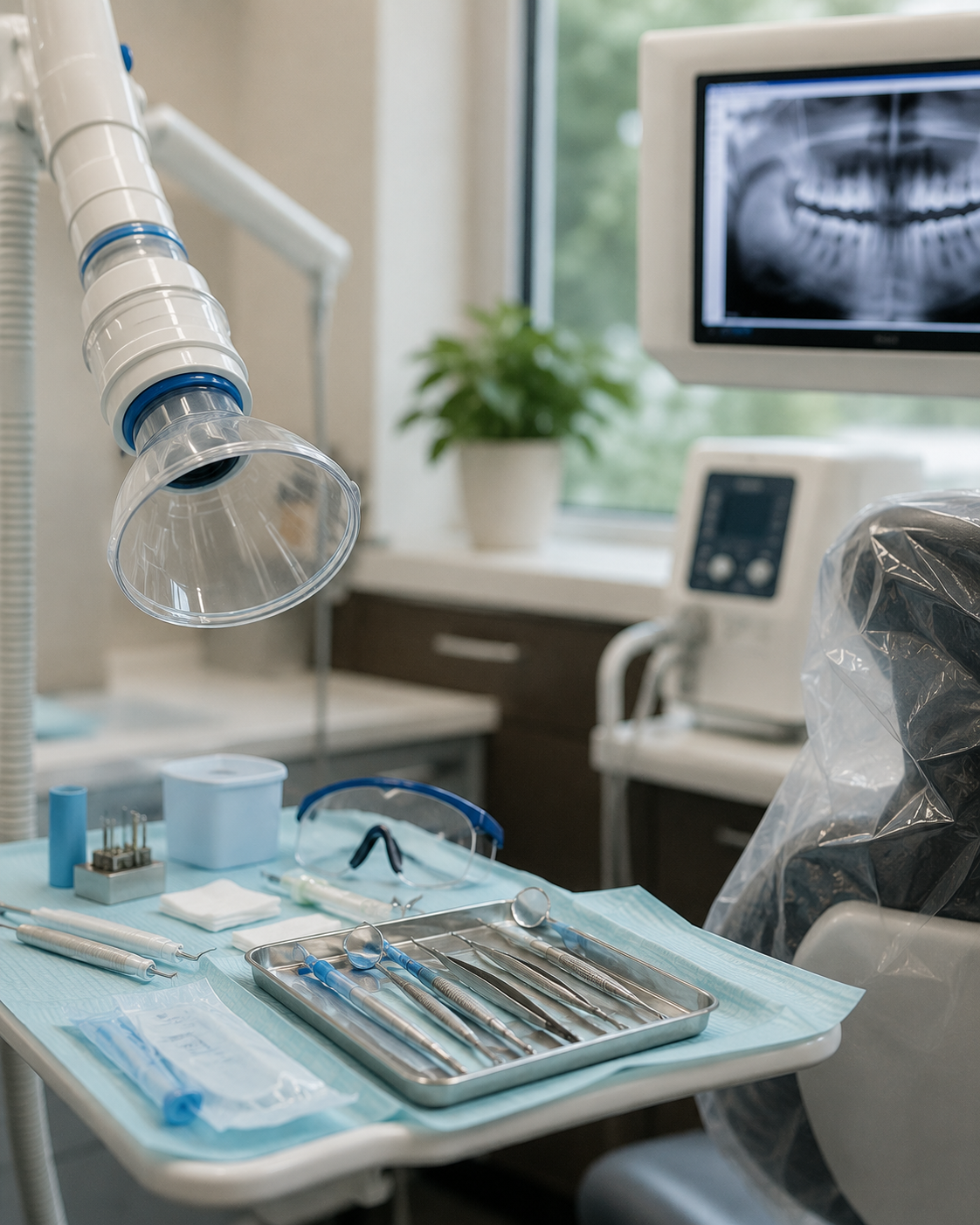
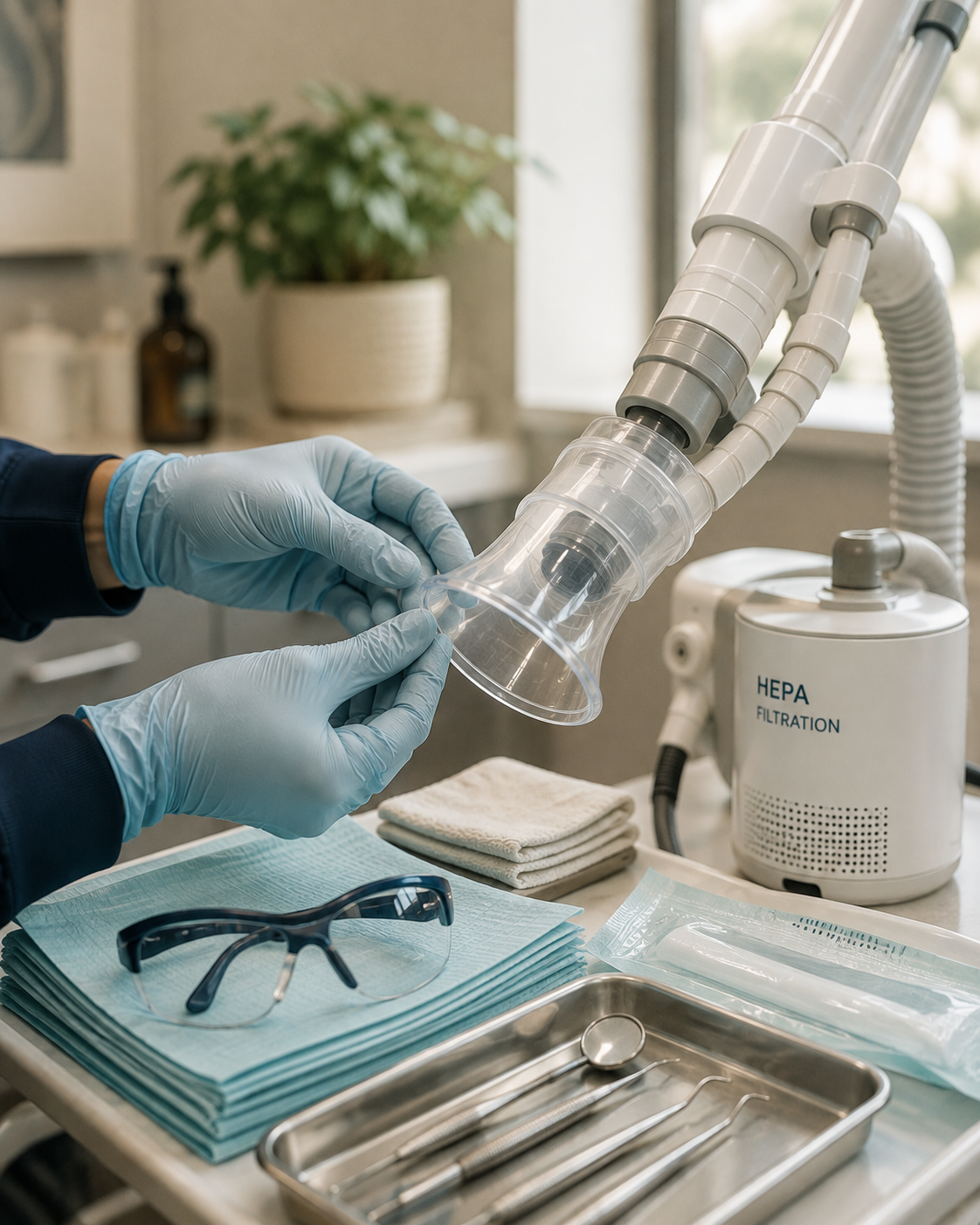
SMART uses multiple protective measures designed to reduce exposure to mercury vapor and amalgam particles during removal.

Protective barriers, isolation, air filtration, and evacuation techniques are incorporated throughout the removal process.

SMART includes specific measures designed to reduce occupational exposure for the dental professionals performing and assisting with amalgam removal.

Patients have the opportunity to understand the procedure, discuss their concerns, and make informed decisions about their dental care.
BIOLOGICAL DENTISTRY & DENTAL MATERIALS
What Is Safe Mercury & Metal Removal?
Safe mercury and metal removal is a careful approach to removing existing dental materials while taking specific measures to reduce unnecessary exposure during the procedure.
Dental amalgam restorations contain a mixture of metals that includes elemental mercury. When an amalgam restoration needs to be removed, cutting or drilling the material can release mercury vapor and small particles. For this reason, Midwest BioHealth approaches amalgam removal differently from routine restorative removal.
Dr. John W. Johnson, DDS follows the Safe Mercury Amalgam Removal Technique (SMART), developed by the International Academy of Oral Medicine and Toxicology (IAOMT), as part of a broader biological approach to dental care.
The objective is not simply to remove a filling. It is to evaluate why treatment is needed, perform the removal carefully, and thoughtfully consider the material that will replace it.
THE SMART PROTOCOL
A Higher Standard for Mercury Amalgam Removal
SMART stands for Safe Mercury Amalgam Removal Technique, a protocol developed by the International Academy of Oral Medicine and Toxicology (IAOMT) to reduce mercury exposure during the removal of dental amalgam fillings.
When amalgam is cut or drilled, mercury vapor and small particles can be released. SMART brings together multiple protective measures designed to reduce exposure for the patient, dental team, and treatment environment throughout the removal procedure.
At Midwest BioHealth, Dr. John W. Johnson, DDS incorporates the SMART protocol when removing mercury amalgam restorations as part of the practice's broader biological approach to dental care.
SMART precautions include:
Protective equipment and coverings for the patient and dental team
Dental isolation of the treatment area
High-volume evacuation near the restoration
Air filtration and aerosol management
Water irrigation during removal
Sectioning techniques intended to reduce unnecessary grinding
Careful collection and disposal of amalgam waste
The result is a more controlled approach to a procedure that deserves careful planning and attention.
WHY IT MATTERS
The Removal Process Deserves Careful Attention
Dental amalgam has been used for generations and contains a mixture of metals that includes elemental mercury. When an existing amalgam restoration needs to be removed, the procedure itself deserves careful consideration.
Cutting or drilling amalgam can release mercury vapor and small particles. For that reason, Midwest BioHealth believes removing an amalgam restoration should involve more than simply taking out an old filling and replacing it with something new.
The SMART protocol provides a structured approach to reducing exposure during removal. It does not mean that every amalgam filling needs to be removed. Instead, when removal is appropriate, it provides additional measures designed to protect the patient, dental team, and treatment environment.
The question isn't simply whether an amalgam filling should be removed. It's how carefully the removal is performed when treatment is appropriate.
While mercury amalgam removal is an important area of focus at Midwest BioHealth, biological dentistry also considers the other dental materials that may be present in a patient's mouth.
When an existing restoration or dental appliance requires replacement, Dr. Johnson evaluates the material, its condition, the surrounding tooth structure, and the patient's individual needs before recommending treatment.
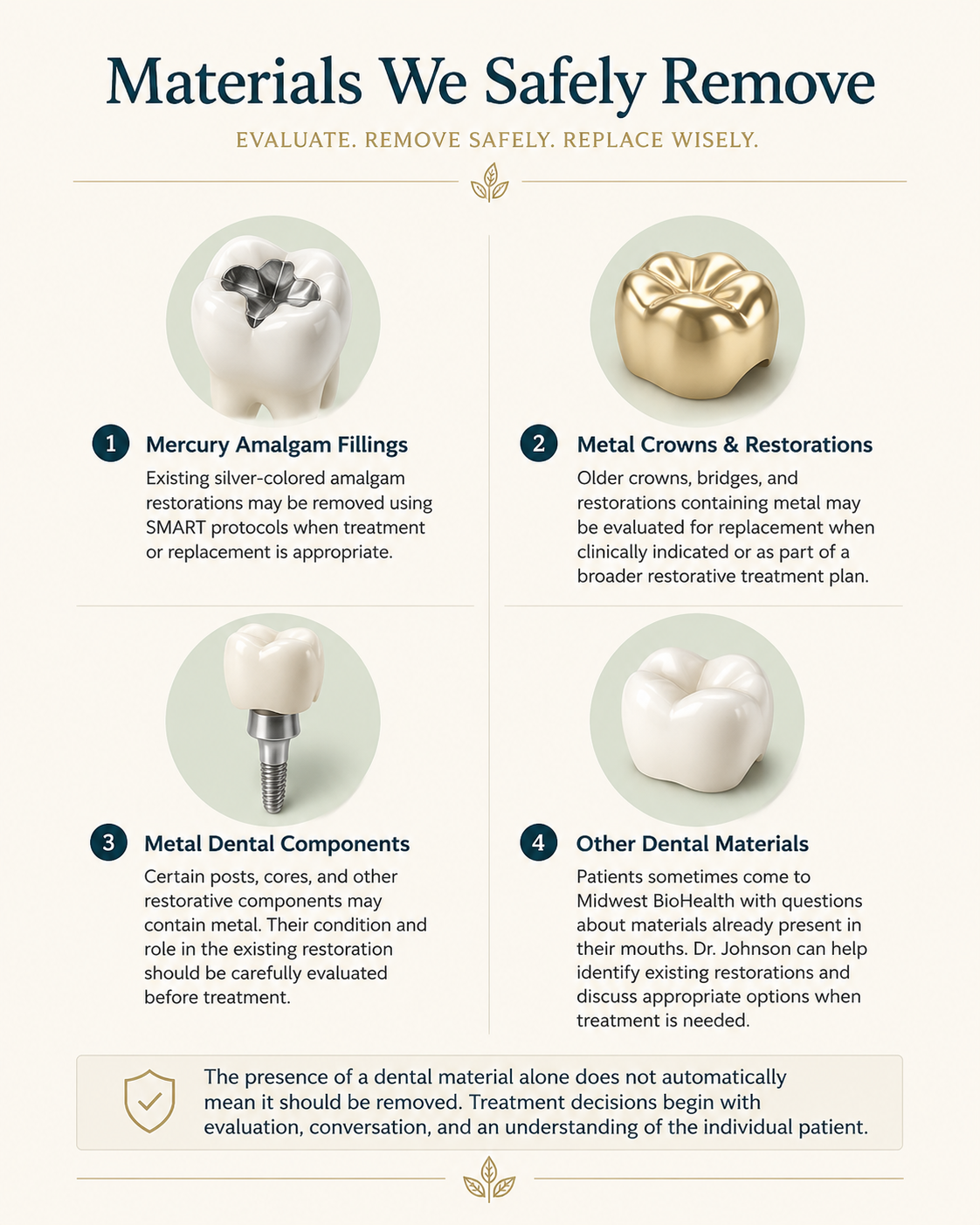
Mercury Amalgam Fillings
Existing silver-colored amalgam restorations may be removed using SMART protocols when treatment or replacement is appropriate.
Metal Crowns & Restorations
Older crowns, bridges, and restorations containing metal may be evaluated for replacement when clinically indicated or as part of a broader restorative treatment plan.
Metal Dental Components
Certain posts, cores, and other restorative components may contain metal. Their condition and role in the existing restoration should be carefully evaluated before treatment.
Other Dental Materials
Patients sometimes come to Midwest BioHealth with questions about materials already present in their mouths. Dr. Johnson can help identify existing restorations and discuss appropriate options when treatment is needed.
The presence of a dental material alone does not automatically mean it should be removed. Treatment decisions begin with evaluation, conversation, and an understanding of the individual patient.
BEYOND AMALGAM
What We Safely Remove
AFTER REMOVAL
Thoughtful, Biocompatible Alternatives
Removing an existing dental restoration is only part of the treatment decision. What replaces it matters, too.
At Midwest BioHealth, restorative materials are selected with consideration for the individual patient, the location and function of the tooth, durability, aesthetics, and biological compatibility. When appropriate, Dr. Johnson favors modern, metal-free restorative options that can provide both natural appearance and long-term function.
Depending on the clinical situation, options may include:
Ceramic Restorations
Modern ceramic materials can provide durable, natural-looking alternatives for many crowns and restorations.
Composite Restorations
Tooth-colored composite materials may be appropriate for certain fillings and restorative applications.
Zirconia
Zirconia is a strong ceramic material used in biological dentistry for certain crowns, restorations, and dental implant applications.
The goal isn't simply to replace metal with something different. It's to select the right material for the individual patient and the clinical situation.
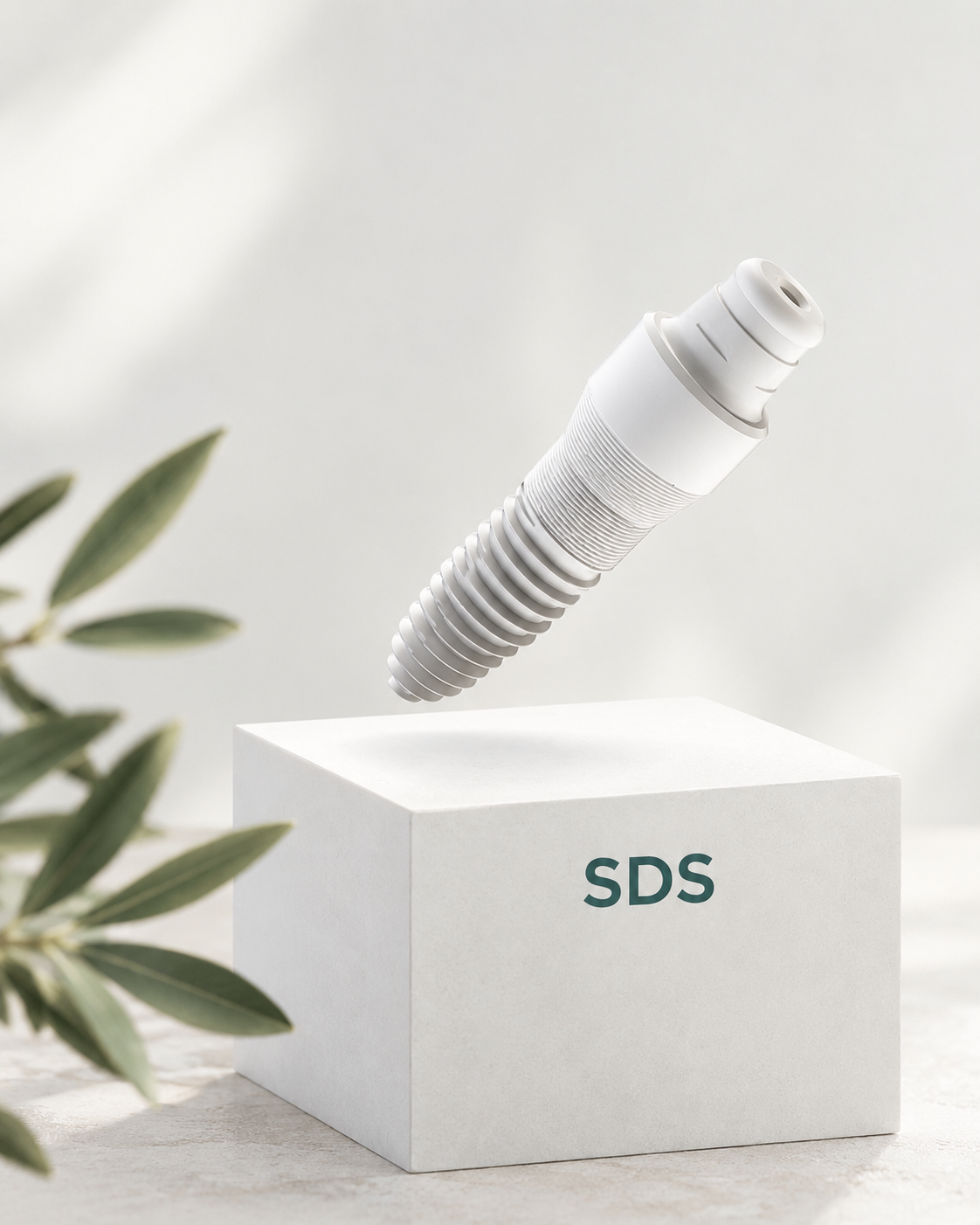
Zirconia ceramic implant technology from Swiss Dental Solutions (SDS), one of the metal-free treatment options available at Midwest BioHealth.
Dr. John W. Johnson, DDS has spent decades studying biological dentistry, dental materials, airway health, and whole-body approaches to oral care.
As a SMART-certified dentist through the International Academy of Oral Medicine and Toxicology (IAOMT), Dr. Johnson has completed education in the Safe Mercury Amalgam Removal Technique and incorporates SMART protocols when removing mercury amalgam restorations at Midwest BioHealth.
For Dr. Johnson, safe amalgam removal is not an isolated procedure. It is part of a broader biological philosophy that considers the materials used in dentistry, the condition of the existing restoration, the patient's individual needs, and the long-term plan for restoring the tooth.
Patients travel to Midwest BioHealth in New Albany from throughout Columbus, Ohio, and the surrounding Midwest seeking biological dentistry and a more considered approach to mercury amalgam and dental metal removal.
EXPERIENCE & TRAINING
SMART Certified Care at Midwest BioHealth

Schedule a Consultation
If you are considering removing mercury fillings or dental metals, we recommend starting with a consultation to evaluate your situation and discuss your options.
Midwest BioHealth
New Albany, Ohio